MAyurveda: Off-The-Mat Self-Care For Yoga Teachers
June 4, 2026
How To Become A Yoga Instructor
June 18, 2026The Best Yoga Poses For Back Pain
Whether your back pain comes from long hours at a desk, a previous injury or just general tension that builds up when you’re not moving enough, yoga offers something most quick fixes don’t.
Yoga can address the root of the problem, not just the symptoms. These poses won’t replace medical care, but when used consistently, they can make a real difference.
KEY TAKEAWAYS:
- Yoga can help address the root causes of back pain by improving flexibility, mobility, core strength, and posture rather than simply masking symptoms.
- Five beginner-friendly poses can help relieve the tension: Child’s Pose, Cat-Cow, Downward-Facing Dog, Supine Twist, and Bridge Pose.
- Core strength plays a major role in back health, and regular yoga practice can strengthen the muscles that support and stabilize the spine.
- Consistency matters more than duration. Even a simple 10-minute routine practiced most days can provide meaningful benefits over time.
- Listening to your body is essential. Gentle stretching sensations are normal, but sharp, radiating, or worsening pain is a sign to stop and modify the pose.
- Props and modifications can make yoga more accessible, allowing people with varying mobility levels or existing conditions to practice safely and comfortably.
The Top Yoga Poses For Back Pain
These five poses form a solid foundation for anyone experiencing back pain. You can do them individually or run through them as a short sequence. Most require nothing but a mat.
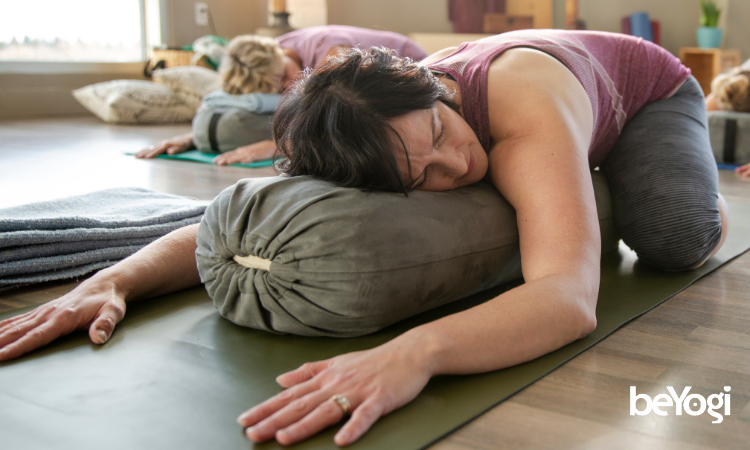
1. Child’s Pose
Start in a kneeling position and spread your knees outward as much as is comfortable.
From this position, sink your hips back toward your heels and stretch your arms forward along the mat to enter child's pose. Your forehead rests down, and your lower back lengthens without effort. Hold for five to 10 slow breaths.
If your hips don’t reach your heels, placing a folded blanket underneath your knees can make the pose more comfortable.
2. Cat-Cow
Cat-Cow is a flowing movement. Start in a tabletop position, with your palms aligned with your shoulders and your knees aligned with your hips. Alternate between rounding your spine toward the ceiling on an exhale for the “cat” part of the movement and dropping your belly toward the floor while lifting your chest on an inhale for the “cow” section.
Repeat this eight to 10 times to warm the spine and mobilize facet joints. If you’re dealing with a disc issue, keep the cow portion gentle, so you have a small lift rather than a deep backbend.
3. Downward-Facing Dog
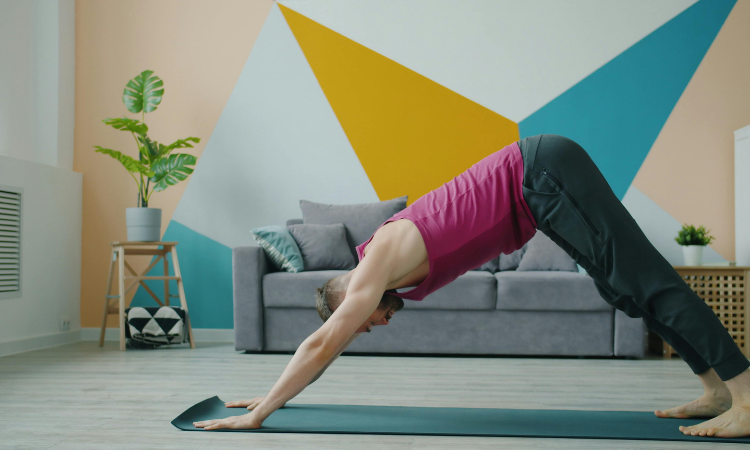
From a tabletop position, spread your fingers, tuck your toes and lift your hips toward the ceiling, forming an inverted V.
Press your heels down or keep a generous bend in the knees if your hamstrings are tight. Keep your head aligned with your spine as you enter downward-facing dog.
Hold the pose for five breaths to decompress the lumbar spine while stretching the hamstrings and calves, which connect directly to the lower back. A bent-knee-down dog doesn’t mean the pose is any less effective.
4. Supine Twist
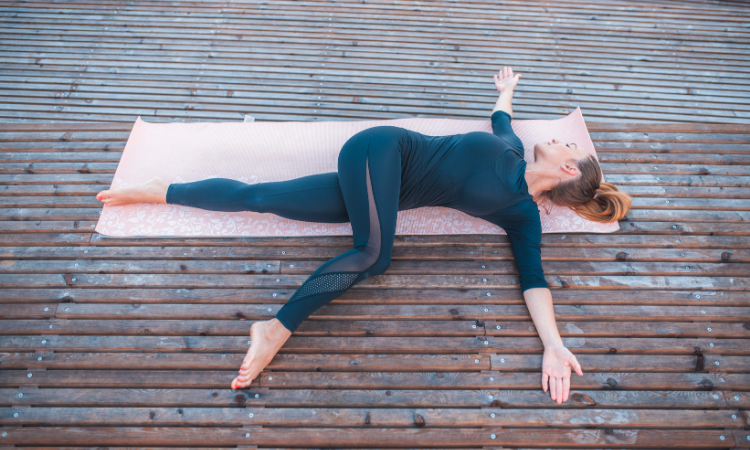
Lie on your back and draw one knee into your chest, then guide it across your body while keeping both shoulders on the ground for a supine twist. Let your gaze turn to the opposite side, hold for 30 seconds, and then switch.
This is one of the most effective yoga poses for back pain because it targets the outer hip and piriformis, a small but stubborn muscle that, when tight, can mimic or worsen lower back pain. Keep the movement slow and don’t force the supine twist. Let gravity do the work.
5. Bridge Pose
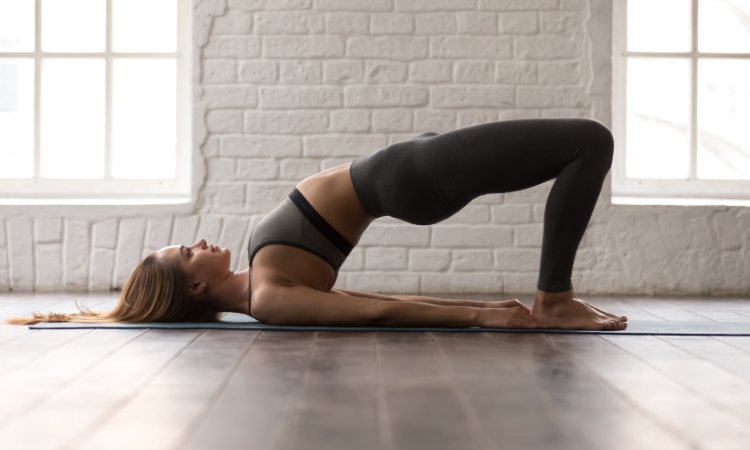
Lie on your back with your knees bent and feet flat on the mat, hip-width apart. Press into your feet and lift your hips toward the ceiling for bridge pose. Hold for five to eight breaths and then lower slowly.
Bridge strengthens the glutes and hamstrings, which take real pressure off the lumbar spine when they’re contributing properly. If a full hold feels like too much at first, start with small pulses rather than a sustained lift, or use a yoga block for added support.
How Yoga Helps Your Back
When your back hurts, the instinct is often to rest. However, in many cases, the spine may need gentle, targeted movement. Yoga delivers that in a few key ways.
Flexibility and decompression come first. Tight hamstrings, hip flexors and the muscles running along either side of the spine all pull on the lumbar region. Consistently stretching them reduces that tension and gives the vertebrae more space to work with.
The next area is core strength. A weak core forces the lower back to pick up the slack, and that’s where a lot of the chronic pain starts. Research consistently links core stability to reduced lower back pain. Yoga builds that stability through poses that engage the deep muscles supporting the spine, not just the surface ones.
This stability has benefits beyond just back pain. A strong core provides the balance you need to stand securely and navigate uneven terrain, which helps avoid falls. A quarter of older adults fall each year, often leading to injuries. By improving core strength, a consistent yoga practice can enhance your balance and overall stability.
Safety Tips And Modifications
Yoga is gentle, but it can aggravate the wrong things if you’re not paying attention. Listen to your body and pay close attention to the sensations you feel. There’s a real difference between the productive pull of a deep stretch and sharp, electric or referred pain that travels down your leg into your foot. If a pose sharpens your pain, sends sensation somewhere unexpected, or causes numbness, come out of it.
Props can help make poses more accessible. Try adding a block under your hips in a supine twist, a blanket under your knees in child’s pose or a strap to bridge the gap in a forward fold. Props can make the poses accessible without undermining their purpose and benefits.
If your back pain is acute, recurring, or tied to a diagnosed condition, such as a herniated disc or scoliosis, talk to your doctor or a physiotherapist before starting yoga. A yoga teacher with experience in therapeutic settings can also help you shape a practice that works with your specific condition.
Building A Consistent Practice
Consistency is more important than duration. A 10-minute routine completed on most days will outperform an hour-long session done twice a month. A simple sequence to start with is one minute in child’s pose, two minutes of cat-cow to warm up, one minute in downward dog and then a supine twist on each side and a bridge to close.
In the early weeks, the goal isn’t dramatic improvement. Instead, it’s all about building the habit. Back pain tends to fluctuate, and there will be days when the practice feels harder than others. The cumulative effect of showing up, even briefly, is where the real change happens.
Once the habit is in place, adding one or two longer sessions per week gives you room to explore more poses and go deeper with what’s actually working for you.
The Final Stretch
Yoga poses for back pain offer a reliable way to build strength, release tension, and give your spine a little more of the attention it needs. Start small, stay consistent and adjust when something doesn’t feel right.
Get Yoga Insurance & Protect Your Yoga Teaching Career Instantly
Save $24