
Tips & Tricks To Get Organized As A Yoga Teacher
May 26, 2026
The Best Yoga Poses For Back Pain
June 8, 2026MAyurveda: Off-The-Mat Self-Care For Yoga Teachers
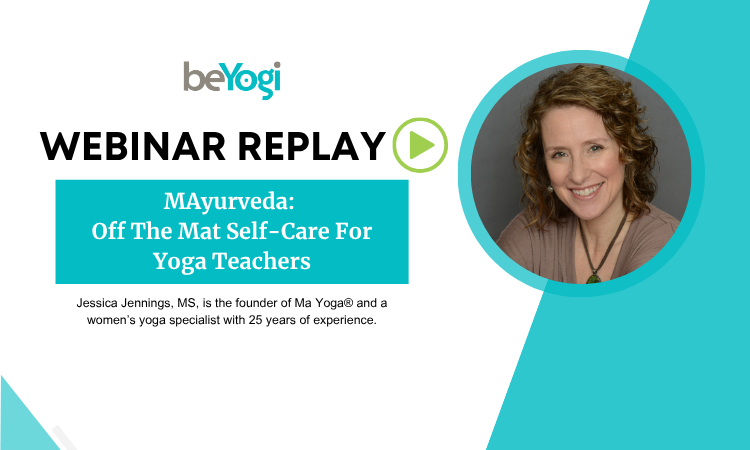
In this beYogi webinar, Jessica Jennings, founder of Ma Yoga® and creator of MAyurveda, shared practical Ayurvedic self-care tools designed specifically for yoga teachers and caregivers.
Drawing from over 25 years of experience teaching yoga and supporting women through pregnancy, postpartum, and beyond, Jessica explored how simple daily rhythms can help us feel more grounded, energized, and resilient - both on and off the mat.
Key Takeaways
- Self-care is not selfish! It’s an essential part of sustaining your energy and showing up fully for your students, family, and community.
- Ayurveda offers a practical framework for understanding imbalance through the three doshas: vata, pitta, and kapha.
- Daily rhythm often has a greater impact on your well-being than your constitutional dosha type. Consistent routines can help create stability, calm, and resilience.
- The Ayurvedic clock teaches us to work with our body's natural energy cycles rather than pushing against them, supporting better focus, digestion, and rest.
- Small daily anchor practices can have a profound impact when practiced consistently.
- Different stages of life naturally emphasize different doshas.
- Lasting transformation comes through consistency.
Fill Out The Form Below To Access The Replay:
In This Webinar
As yoga teachers, we often spend our days supporting others, but what supports us? Ayurveda can help yoga teachers create simple, sustainable self-care practices that build energy, resilience, and balance off the mat.
Drawing from her MAyurveda framework, Jessica shares how daily rhythms, nervous system regulation, and foundational self-care practices can help us show up more fully for our students, families, and ourselves. Rather than focusing on perfection, she encourages teachers to embrace consistency and work with the body's natural cycles to cultivate lasting well-being.
Understanding Your Dosha
There are three doshas (vata, pitta, and kapha), they show up as energetic patterns in the body and nervous system. Rather than viewing doshas as personality types, you should notice how imbalance feels in real time, whether that looks like feeling scattered, overheated, or stuck.
Why Rhythm Matters
One of the core teachings of MAyurveda is that what fills your day often has a greater impact on your energy than your constitutional dosha type. Simple routines and predictable rhythms can help stabilize the nervous system, reduce stress, and support more sustainable energy.
Working With the Ayurvedic Clock
Throughout the day, different energetic qualities influence our focus, digestion, creativity, and sleep. The Ayurvedic clock and how aligning with these natural rhythms can help us work with our bodies instead of constantly pushing against them.
Six Daily Anchor Practices
The webinar also explores six foundational practices that support balance across all doshas. These simple routines – including sleep habits, meal timing, movement, and evening rituals – are designed to be realistic and supportive, even during life's busiest seasons.
Supporting Different Seasons of Life
Different stages of life can naturally increase certain doshic qualities. Pregnancy often amplifies kapha energy, while postpartum can increase vata qualities such as depletion and nervous system sensitivity. Understanding these shifts allows us to adjust our routines and self-care practices accordingly.
About Jessica Jennings
Jessica Jennings, MS, is the founder of Ma Yoga® and a specialist in prenatal and women's yoga with more than 25 years of experience. Through her prenatal yoga teacher trainings, therapeutic programs, self-care continuing education courses, and RPYT certification programs, she has trained hundreds of yoga teachers around the world.
Jessica created MAyurveda after discovering how simple Ayurvedic self-care practices transformed her own postpartum recovery. Today, she is passionate about helping yoga teachers and mothers cultivate sustainable energy, prevent burnout, and integrate practical wellness tools that support them both on and off the mat.
Additional Resources
- MAyurveda Dosha Survey: Discover which doshic patterns may be influencing your energy, habits, and overall well-being.
- Anchor Practices Blog: Learn simple lifestyle practices that can help create more rhythm, stability, and balance in daily life.
- Prenatal Yoga Teacher Training & Certification: Expand your knowledge and confidence in supporting prenatal students through a comprehensive certification program.
- Free 5 Elements of Prenatal Yoga Training: Access Jessica's free training and explore foundational principles of prenatal yoga and women's wellness.
Get Yoga Insurance & Protect Your Yoga Teaching Career Instantly
Save $24